"Phil is not only a great guy, but he genuinely knows how to solve any problem you throw at him, and we've certainly had a few over the years."
Melanie B., Google review
★★★★★
"Phil is hands-down the best pest control guy we've ever had. He shows up right on time, always friendly and professional, and took the time to actually explain what he was doing and why."
Tanya G., Google review
★★★★★
"Had an amazing experience. They were very quick and efficient, I couldn't have asked for anything more. Phil and his team did an amazing job and couldn't recommend more."
Jorja W., Google review
★★★★★
"Gave me honest and genuine advice and service at a great price."
Google review
★★★★★
"Extremely high standard of work, communication and customer service."
Google review
★★★★★
"Phil and Cooper did a fantastic job cleaning our carpet, rugs and furniture."
Google review
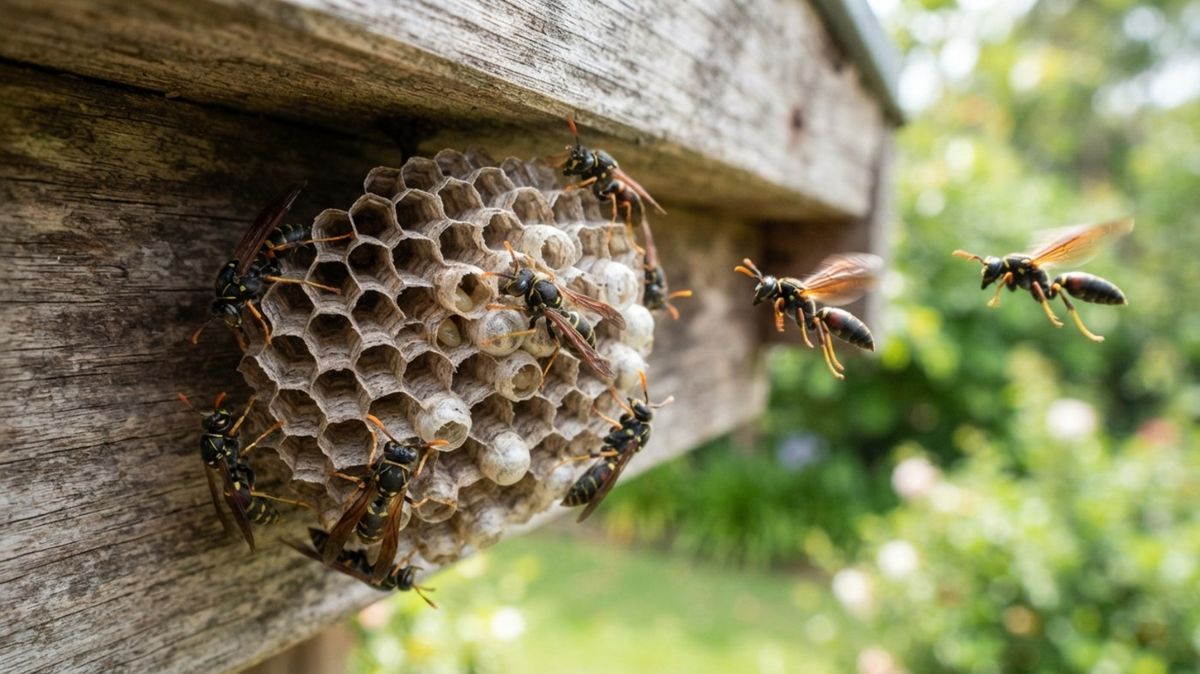
Short answer: do not attempt to remove an active wasp nest yourself, especially one that is hidden or hard to reach, since disturbing it risks multiple stings. Keep people and pets well away from the area and call a professional once a nest is confirmed, rather than trying to knock it down or spray it yourself.
Written by Phil, CPH Services Gold Coast. Carpet cleaning technician and licensed pest control technician, working Gold Coast properties since 2011. IICRC accredited. Three Best Rated Best Business, 2016 to 2026.
Spotting a wasp nest before it becomes a problem
Regular activity around a single spot, under eaves, in a roof cavity, inside a wall cavity, or around outdoor furniture, is usually the first sign a nest is forming nearby. Catching this early, before the nest grows large, generally makes any treatment simpler and safer.
Why DIY wasp removal is genuinely risky
Wasps defend an active nest aggressively, and disturbing one without the right protective equipment and technique risks multiple stings in a short space of time. This is a real safety consideration, not just a convenience one, particularly for anyone in the household with a known sting allergy.
What to do if you find a nest
Keep people and pets away from the immediate area, avoid disturbing it, and call a professional once you have confirmed a nest is there. Do not attempt to knock it down or spray it yourself, especially anywhere hard to reach or partially hidden.
Prevention between seasons
Checking common nesting spots, eaves, roof voids, garden sheds, at the start of the warmer months can catch a new nest while it is still small, which is a much simpler situation to deal with than an established one later in the season.
Got a pest problem and not sure where it fits? Call 1300 85 48 28 and describe what you are seeing, we will tell you honestly whether it is something we treat.
Got questions? Straight answers below. Or skip ahead:
It carries real risk, particularly for a nest that is established, hidden, or hard to reach safely. Disturbing an active nest without the right protective equipment and technique risks multiple stings, and for anyone with a wasp sting allergy, that risk is serious.
What time of year are wasps most active on the Gold Coast?
Wasp activity typically increases through late summer and into autumn as nests reach their largest size for the season. Warmer months generally see more wasp activity here than cooler ones.
Are all wasps equally dangerous?
No, but it is not worth guessing which is which from a distance. Some species are more aggressive or deliver a more painful sting than others, and correctly identifying the species is part of what a professional treatment gets right that a guess does not.
Does wasp treatment carry a warranty?
No. Wasps are among the pests that do not carry a treatment warranty, since new wasps can establish a fresh nest in the same general area after treatment, the same honest reasoning that applies to spiders and silverfish.
Ready for an honest estimate?
Tell us about the job in 60 seconds. Personal reply, usually the same day. No pressure, no lock-in, no call centre.