"Phil is not only a great guy, but he genuinely knows how to solve any problem you throw at him, and we've certainly had a few over the years."
Melanie B., Google review
★★★★★
"Phil is hands-down the best pest control guy we've ever had. He shows up right on time, always friendly and professional, and took the time to actually explain what he was doing and why."
Tanya G., Google review
★★★★★
"Had an amazing experience. They were very quick and efficient, I couldn't have asked for anything more. Phil and his team did an amazing job and couldn't recommend more."
Jorja W., Google review
★★★★★
"Gave me honest and genuine advice and service at a great price."
Google review
★★★★★
"Extremely high standard of work, communication and customer service."
Google review
★★★★★
"Phil and Cooper did a fantastic job cleaning our carpet, rugs and furniture."
Google review
Short answer: no, not reliably. Baking soda has no insecticidal properties and there is no good evidence it kills adult fleas outright. At best it can act as a mild, unreliable drying agent on some surface level eggs when worked into dry carpet with a stiff brush and left 12 to 24 hours before a thorough vacuum, but it does nothing for the eggs sitting deeper in the fibre, and nothing at all for larvae or pupae, the toughest and most protected stage of the flea life cycle. Adult fleas are only around 5% of an infestation at any one time, the other 95% is eggs, larvae and pupae, so a surface treatment that only reaches the top of the carpet leaves most of the actual problem untouched. Baking soda can sit alongside the real protocol as a minor supplement, but it is not a substitute for it.
Written by Phil, CPH Services Gold Coast. Carpet cleaning technician and licensed pest control technician, working Gold Coast properties since 2011. IICRC accredited. Three Best Rated Best Business, 2016 to 2026.
When the home remedies have not worked, our flea treatment page covers the licensed treatment, and our pest control Gold Coast page explains where fleas sit as an add on to a general pest treatment.
Where the baking soda myth comes from
The theory sounds reasonable enough: baking soda is a mild abrasive and can absorb moisture, so sprinkling it on carpet should dry out and kill fleas the same way it is sometimes used to deal with other household pests. In practice, fleas are built to resist exactly that. They carry a tough, waxy outer shell that helps them hold onto moisture, and that waxy layer is what a genuine desiccant needs to break down before dehydration can actually kill anything. Baking soda is not abrasive or drying enough on its own to reliably get through it, which is why testing has generally found flea larvae are largely unaffected by a sodium bicarbonate treatment. It is a home remedy with a plausible-sounding theory behind it, not a proven pest control method.
What baking soda can actually do
Used properly, baking soda is not entirely useless, it is just not a flea killer. Sprinkled generously on dry carpet, worked in with a stiff brush, and left for 12 to 24 hours before being vacuumed thoroughly, it can help freshen the carpet and may have a very minor drying effect on some fleas eggs sitting right on the surface. That is the honest ceiling of what it does. It will not touch eggs that have worked their way deeper into the pile, it will not affect larvae feeding on organic debris in the carpet, and it has no effect on pupae, which are already sealed inside a protective cocoon built specifically to survive things like this.
Why any surface remedy runs into the same wall
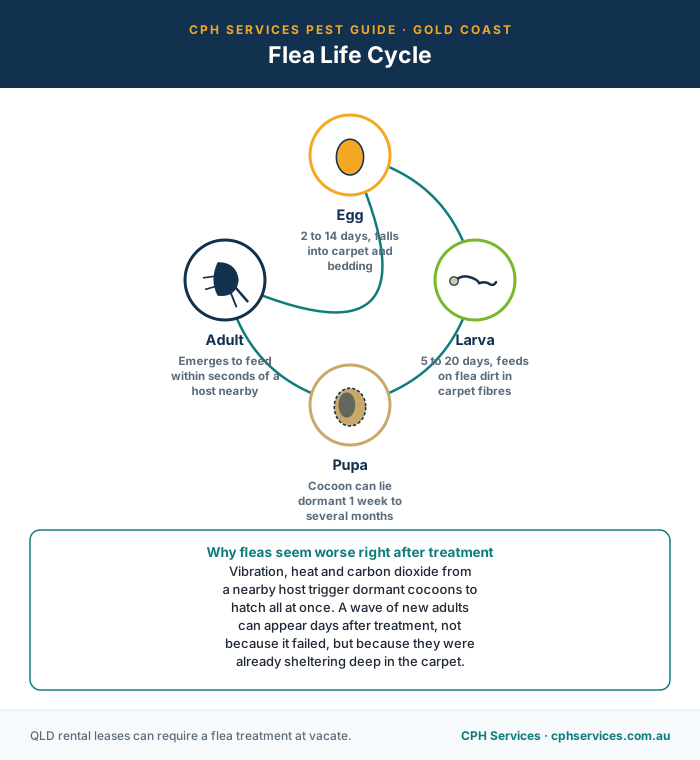
This is not really a baking soda problem, it is a flea life cycle problem, and it is the same reason most DIY sprays and home remedies underperform. Only about 5% of a flea infestation is the adult fleas you actually see jumping. The other 95% is eggs, larvae and pupae, mostly hidden deep in carpet fibre, rugs, pet bedding and the shaded, humid parts of the yard where pets rest. Pupae in particular can lie dormant in their cocoon for weeks or months, protected from sprays, powders and vacuuming alike, until the vibration and warmth of a passing host triggers them to hatch. Any treatment that only reaches the visible surface, baking soda included, is only ever addressing a small slice of what is actually happening in the home.
Seeing fleas come back no matter what you try? That is usually the life cycle finishing, not a failed effort. It generally means the visible surface was treated, not the eggs, larvae and pupae underneath it.
Got questions? Straight answers below. Or skip ahead:
Breaking a flea infestation means treating the whole cycle, not just the fleas you can see. Our full flea treatment protocol guide sets out the complete DIY steps, but the short version is:
The DIY steps
Treat every pet in the home the same day with a vet approved product
Vacuum all carpeted areas and soft furnishings daily for at least 14 days, emptying outside each time
Hot wash all pet and human bedding at 60 degrees Celsius where the fabric allows
Treat shaded, humid outdoor areas where pets rest, not just indoors
When it needs a professional
Whole house or established infestations, where DIY cannot reach every hiding spot
Rental vacates where the lease requires a licensed treatment receipt
Fleas that keep returning from outdoor sources like local wildlife
Anywhere baking soda, sprays or powders have already been tried without success
Our professional flea treatment targets eggs and larvae as well as adult fleas, carried out by a licensed pest control technician. It commonly takes one to two weeks to see fleas fully gone as any remaining eggs hatch into the treated area and die off, which is expected, not a sign it has not worked.
Tried the home remedies and still seeing fleas? Call 1300 85 48 28. We will give you an honest read on whether it is time for a professional treatment, not a hard sell.
Frequently asked questions
Does baking soda kill fleas?
Not reliably. Baking soda has no insecticidal properties and there is no good evidence it kills adult fleas. Fleas have a tough, waxy outer shell built to hold in moisture, which is exactly what a desiccant needs to break down to work, and baking soda alone is not abrasive or drying enough to do that consistently.
Does baking soda kill flea eggs?
It may have a very minor drying effect on some surface level eggs if worked into dry carpet with a stiff brush and left 12 to 24 hours before a thorough vacuum, but it does nothing for eggs deeper in the carpet fibre, and nothing at all for the larvae and pupae stages, which is most of the actual infestation.
What actually gets rid of fleas at home?
Treating every pet in the home on the same day with a vet approved product, vacuuming all carpeted areas and soft furnishings daily for at least 14 days, hot washing all bedding at 60 degrees Celsius, and treating shaded outdoor areas where pets rest. A whole house infestation or a rental vacate that needs a receipt generally needs a licensed professional treatment on top of that, since DIY sprays and home remedies cannot reach every hiding spot the flea life cycle uses.
Why do fleas keep coming back after I clean?
Adult fleas are only around 5% of an infestation at any one time. The other 95% is eggs, larvae and pupae, hidden in carpet fibre, rugs, pet bedding and shaded parts of the yard. Pupae are the hardest stage to kill and can lie dormant in a protective cocoon for weeks, waiting for a passing host to trigger hatching, which is why a home can seem flea free for a while and then suddenly have an active infestation again.
Do flea treatments come with a warranty?
Only on an active infestation, and only where the job is done in full. A rental exit or precautionary flea treatment carries no warranty. On an active infestation a warranty applies where the full three step treatment is done indoors and outdoors, every pet is treated and stays on prevention, and the follow up visit is taken. Leave any of that out and there is no warranty, because reinfestation from the animal or from outside sources such as local wildlife is common and beyond our control. There is no fixed period, it is set per infestation and written on your service report. We explain where you stand honestly before the job, not after.
Ready for an honest estimate?
Tell us about the job. Phil replies personally between jobs, usually within 2 to 4 hours. Urgent? Call 1300 85 48 28. No pressure, no lock-in, no call centre.